

Pain in the limbs, dizziness, and fainting — these can be signs of complex congenital vascular conditions. A young girl came to Okhmatdyt presenting exactly these symptoms.
Her leg had gradually increased in size, and the excessive strain on her vascular system worsened her overall condition, making it difficult for her to remain upright for long periods.
This condition involves the abnormal development of multiple types of vessels simultaneously — lymphatic, venous, and capillary. Externally, it can appear as capillary spots, venous and lymphatic nodules, and so-called embryonic veins — vessels that did not fully mature in utero and remain functionally incomplete.
Previously, patients with such conditions underwent open surgeries with large incisions. However, these procedures did not provide a radical solution — the disease continued to progress.
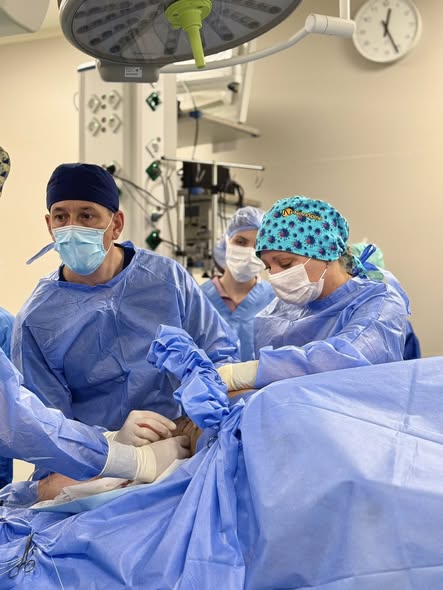
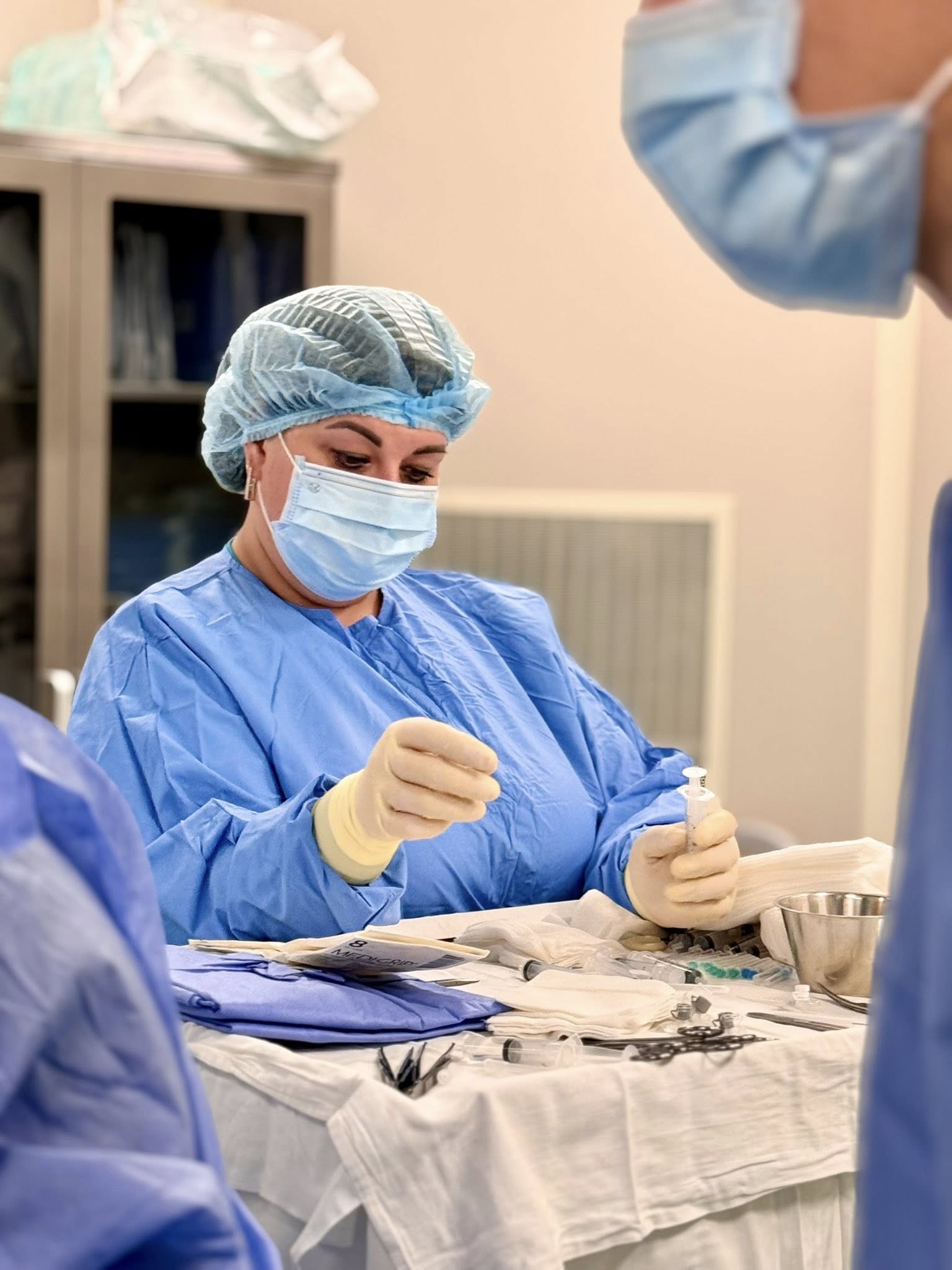
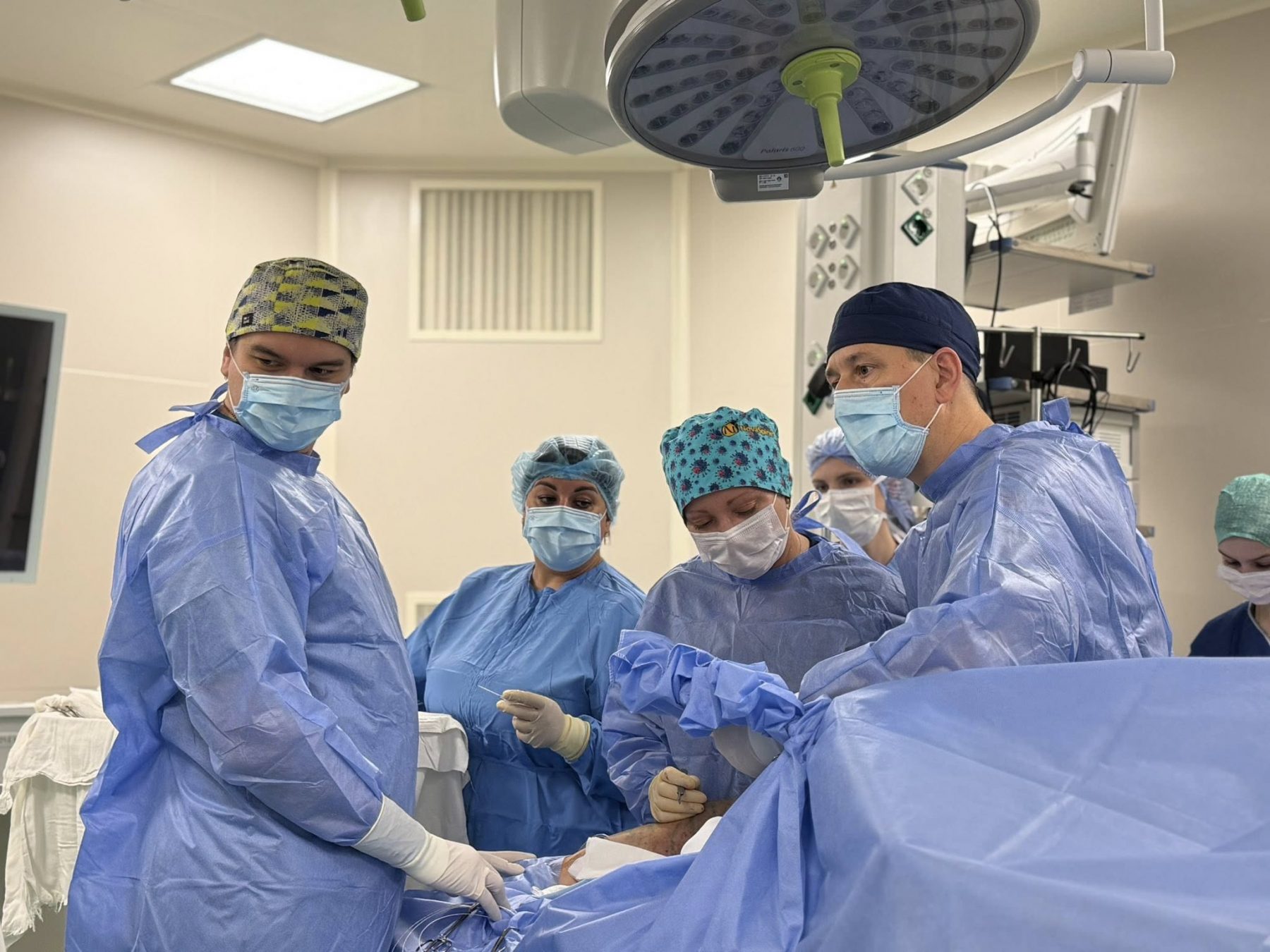
This time, Okhmatdyt applied a modern minimally invasive technique: endovascular laser ablation. Our doctors performed the procedure in collaboration with specialists from the O. O. Bohomolets National Medical University. Its uniqueness lies in the adaptation of a technology long used in adult surgery to treat a pediatric vascular condition.
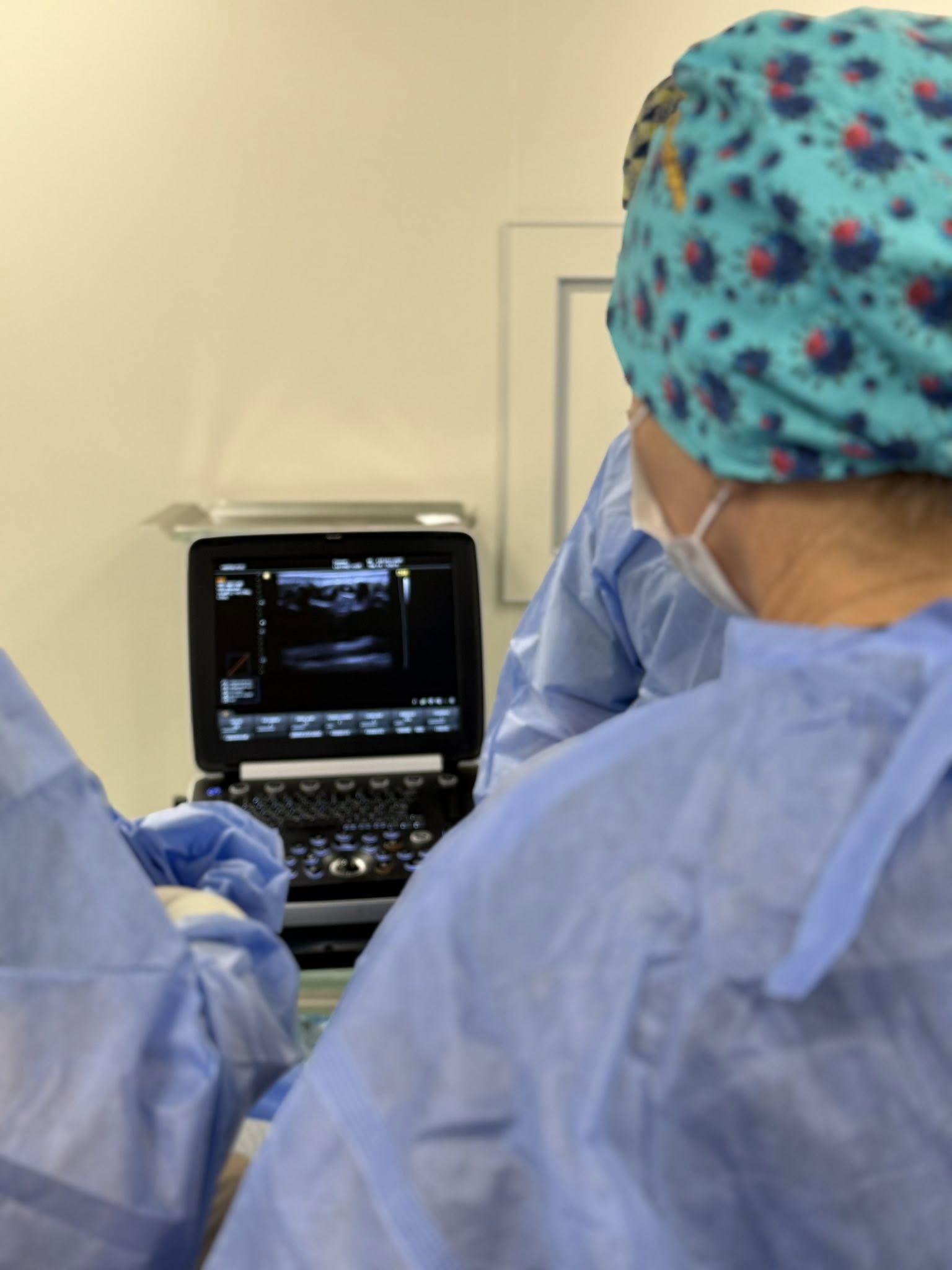
Endovascular laser ablation involves inserting a laser electrode into the pathological vein through a catheter under ultrasound guidance. The laser heats the vessel wall from the inside, destroying its inner lining, after which the vein gradually closes and is excluded from the bloodstream. This helps reduce venous congestion, lymphatic stasis, and strain on the limb.
In children, however, the procedure has specific challenges. Embryonic veins lack valves and have thickened vessel walls, requiring stronger laser energy, longer manipulation, and repeated interventions.
“This is a genetic pathology of the vessel wall structure. It has nothing to do with classic varicose veins, even though it may look similar externally. The issue is not a connection problem between deep and superficial veins but the inherent insufficiency of the vessel wall. This leads to their overgrowth, limb enlargement, and a complex set of pathological changes from childhood,” explain vascular surgeon Borys Koval and Professor Iryna Benzar from the Department of Pediatric Surgery at O. O. Bohomolets National Medical University.
Each year, hundreds of children with similar congenital vascular conditions are treated at Okhmatdyt. These are complex patients whose conditions cannot be “cured in a single procedure.” Their treatment requires a long, staged approach and ongoing monitoring. While laser ablation is not a radical cure, it significantly improves the child’s condition: reducing pain, swelling, venous and lymphatic congestion, improving quality of life, and allowing movement without constant physical exhaustion.